






As technology becomes part of everyday life, cities around the world are exploring new ways to improve urban transport. In this shift, Dubai has moved early by introducing autonomous mobility solutions that aim to make travel safer, more efficient and better connected.
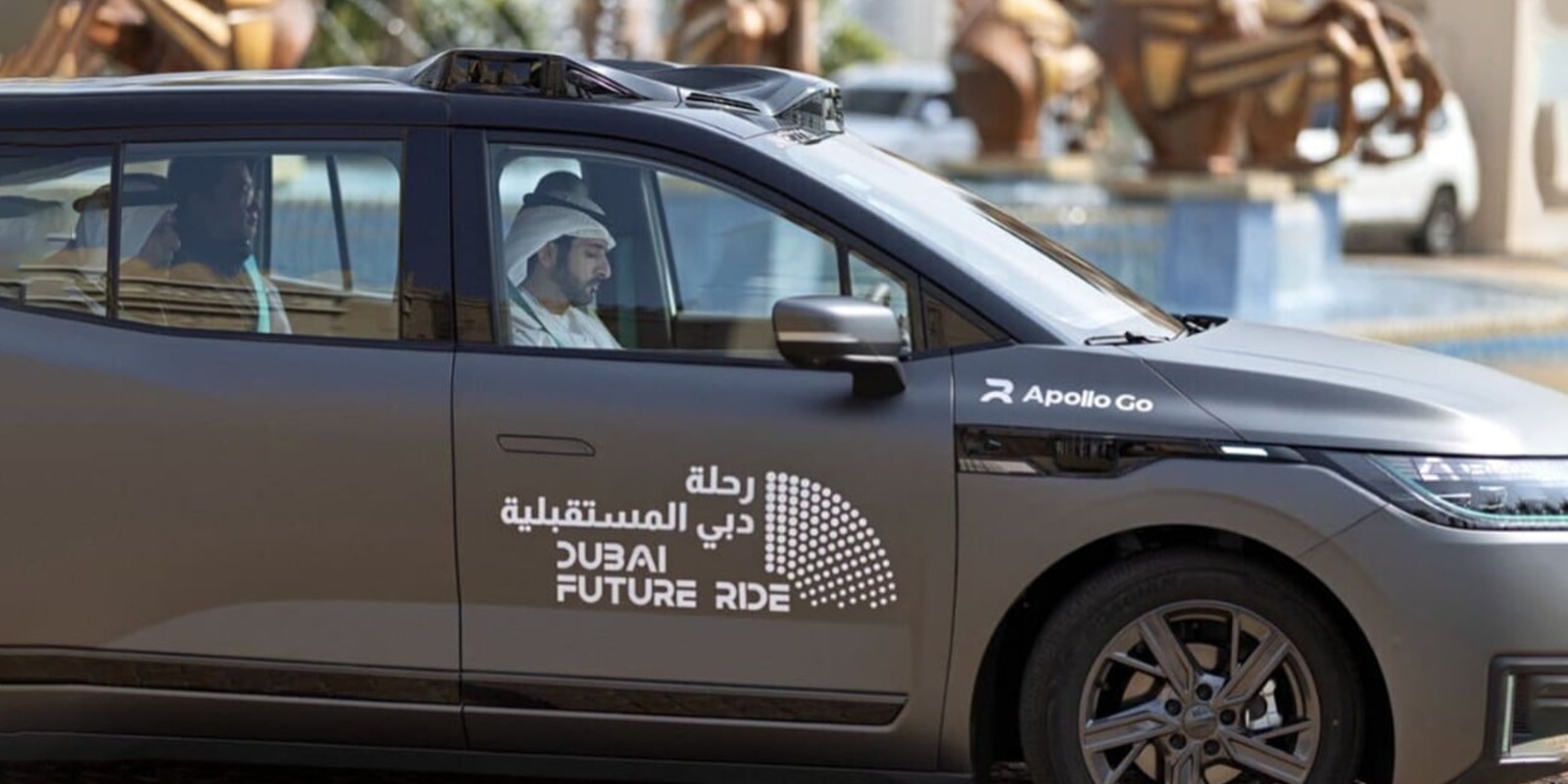
The launch was led by Sheikh Hamdan who inaugurated the operations of the RT6 autonomous taxi vehicles developed by Baidu’s autonomous mobility platform Apollo Go. To mark the occasion, Sheikh Hamdan travelled in one of the driverless vehicles to the World Governments Summit at Madinat Jumeirah.
The RT6 represents the sixth generation of autonomous taxis developed by Baidu and is designed for large scale deployment in urban environments. The vehicle is equipped with more than 40 advanced sensors, including high-precision LiDAR systems, multi-band radars and intelligent cameras
AI plays a central role in the vehicle’s operation. Its software integrates high definition maps, real time data and deep learning algorithms that enable the system to safely navigate complex city environments. The autonomous platform is capable of interacting with pedestrians, managing intersections and responding to surrounding vehicles while complying fully with traffic regulations.
Globally, Apollo Go has already demonstrated the scalability of this technology. The autonomous fleet has completed more than 150 million kilometres of testing and operations and has delivered over 10 million driverless rides, creating a strong operational foundation for commercial deployment in new markets.
The introduction of autonomous taxis in Dubai is the result of close collaboration between the emirate’s transport authorities and Apollo Go. Discussions between the two sides began during the 2025 World Governments Summit and quickly progressed toward implementation.
Within just ten months, the project moved from early discussions to a signed Memorandum of Understanding and operational testing on Dubai’s roads. This rapid timeline reflects the emirate’s efficient regulatory framework, strong infrastructure and ability to translate technological vision into real-world solutions.
Looking ahead
The autonomous taxi service is expected to be rolled out to the public in the first quarter of 2026. Over the coming years, authorities plan to significantly expand the fleet, with the number of vehicles projected to exceed 1,000.
This initiative represents more than a technological milestone. It signals a shift in how cities will approach mobility in the future. By integrating AI and advanced sensing systems Dubai is building a transportation model that prioritises efficiency, safety and sustainability.
For sectors that rely on innovation and global confidence like real estate, such developments hold considerable importance. When a city successfully advances projects such as robotaxis, it reflects a clear commitment to forward planning and technological progress. This outlook not only reinforces investor confidence but also contributes to sustained, long term economic growth.